

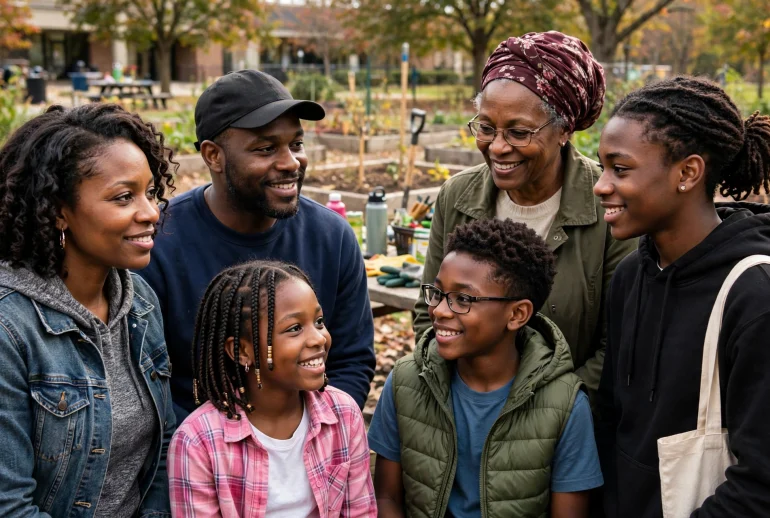
A Maryland high school senior can pass every required course, prepare for graduation, and still discover that an unfinished service-learning requirement stands between them and a diploma.
For some families, the problem is not that the student refused to volunteer. It is that nobody fully understood which activities counted, how hours were recorded, or when the paperwork needed to be submitted. A teenager may have helped at community events for years, only to learn that undocumented service cannot automatically be credited toward graduation.
Maryland’s student service-learning requirement is intended to connect education with civic responsibility. Students participate in activities addressing community needs, apply what they have learned, and reflect on the experience. The purpose is educational as well as practical: young people should graduate with some understanding of their responsibility to the communities around them.
But meaningful service and a graduation requirement are not always experienced in the same way. Families must also navigate forms, school policies, transportation, schedules, and approval procedures.
For Black parents and African Diaspora families in the DMV, understanding the rules early can prevent a valuable learning opportunity from becoming another source of pressure during the final year of high school.
The good news is that students do not necessarily need to complete 75 hours of independent volunteering outside school. Some Maryland districts incorporate substantial portions of the requirement into regular coursework.
Knowing what your child’s school system already provides is the first step.
What Maryland Actually Requires
Maryland’s graduation regulations require students to complete 75 hours of student service involving preparation, action, and reflection, or participate in a locally designed student service program approved by the State Superintendent of Schools.
The distinction matters because school systems can organize their programs differently.
Student service-learning is not simply unpaid work. The Maryland State Department of Education defines it as an instructional approach that combines service to the community with curriculum-based learning.
Three components form the foundation.
Academic preparation: Students investigate a community need and acquire relevant knowledge before taking action.
Service action: Students participate in meaningful activities designed to address that need.
Structured reflection: Students consider what they learned, how their activities affected others, and what the experience revealed about the community.
Imagine a group of middle school students studying food insecurity. They research the barriers some households face in obtaining nutritious food, organize a collection for an approved community organization, and afterward discuss what they discovered about food access.
That experience is more than collecting donations. It connects classroom learning to a social issue, invites students to participate in a response, and asks them to evaluate the significance of their work.
This is the educational principle behind the requirement.
Maryland’s service-learning guidelines, revised in February 2026, also emphasize meaningful community needs, preparation, student responsibility, collaboration, curriculum connections, and reflection.
Parents should therefore resist the assumption that any volunteer activity automatically qualifies.
Approval matters just as much as participation.
Montgomery and Prince George’s Counties Follow Different Models
Two of Maryland’s largest school systems illustrate why parents should not rely on information from another district.
Montgomery County Public Schools
Montgomery County Public Schools (MCPS) requires students to accumulate 75 Student Service Learning (SSL) hours for graduation.
Students can begin earning eligible hours during the summer after fifth grade and continue accumulating them throughout middle and high school.
This offers families considerable flexibility. A student who begins in middle school has several years to satisfy the requirement, rather than trying to complete everything during senior year.
MCPS students can earn hours through qualifying school-sponsored activities or approved community organizations. The district identifies recognized opportunities through the Montgomery County Volunteer Center.
Families should pay particular attention to the approval process for outside organizations. When an organization or opportunity does not have the designated MCPS SSL approval, students must use the district’s Individual SSL Request Form 560-50 before participating.
The district also requires its SSL Activity Verification Form 560-51 to document completed service.
In August 2026, MCPS announced updated versions of these forms, including changes intended to capture academic preparation, service activity, and student reflection more clearly.
Parents using forms saved from previous school years should obtain the current versions before submitting documentation.
Prince George’s County Public Schools
Prince George’s County Public Schools (PGCPS) also operates under the 75-hour graduation framework, but its approved program uses a different structure.
The district divides the requirement into two components:
51 curriculum-infused hours connected to science and social studies coursework.
24 independent service-learning hours completed through qualifying community-based activities.
That distinction is significant.
A family hearing that Maryland requires 75 hours might assume its student needs to spend 75 hours volunteering on weekends or during school vacations. In Prince George’s County, eligible students following the full district program earn most of those hours through approved coursework.
The independent portion still requires planning, participation, and documentation.
PGCPS students should obtain approval from the school-based service-learning coordinator or professional school counselor before beginning independent service at a community site. The district’s procedures also require verification of completed activities.
Prince George’s County updated its service-learning administrative procedure in July 2026, making the current district guidance particularly important for families preparing for the 2026–27 school year.
The lesson is straightforward: the state establishes the graduation requirement, but your school system determines how its approved program is implemented.
Parents should verify the requirements recorded for their own child rather than assuming every Maryland student follows the same pathway.
Which Volunteer Activities Actually Count?
When families think about community service, familiar activities often come to mind: helping distribute food, organizing donated clothing, assisting at local events, supporting senior citizens, participating in environmental projects, or helping younger students.
Many such activities may be appropriate for service-learning. But whether a particular opportunity qualifies depends on its structure and the approval requirements of the school system.
A teenager who volunteers at a community food pantry, for example, may be participating in meaningful service. Yet the student still needs to determine whether the organization is approved, whether the activity satisfies the educational components, and what documentation must be completed.
Parents should also recognize that service can take different forms.
Direct service involves working with people or groups who benefit from the activity.
Indirect service supports a community need behind the scenes, such as preparing materials or organizing resources.
Advocacy service involves efforts to educate others, raise awareness, or address a public concern.
The available options can be broader than families initially realize.
A student interested in environmental science may help with an approved conservation project. Someone considering education may explore approved literacy initiatives. A teenager interested in public health could learn about community needs through an eligible health-related service activity.
The strongest opportunity often connects a genuine community need with something the student wants to understand.
However, not every well-intentioned activity receives credit.
Prince George’s County, for example, explicitly excludes ordinary babysitting for relatives or neighbors from qualifying service. Its rules also exclude proselytizing and activities whose primary purpose is preparing for or participating in religious services.
At the same time, qualifying community assistance conducted through a faith-based organization may count when the activity serves an approved public need rather than a religious instructional or conversion purpose.
That distinction is especially useful for families whose children already participate in church-sponsored outreach, neighborhood programs, or cultural community organizations.
A food distribution effort organized by a church may be eligible under applicable rules. Participation in a regular worship service is not the same kind of activity.
Families should confirm approval before counting on those hours.
The Problem With Waiting Until Senior Year
The administrative side of service-learning can be less memorable than the service itself, but it is often where students encounter difficulty.
Consider a teenager who completes several days of volunteering during summer vacation. The work is meaningful, the organization is appreciative, and the student returns to school believing the requirement is nearly finished.
Months later, the family realizes that the necessary verification form was never submitted.
The student may have contributed real time and effort, yet the official record does not reflect it.
This is why service-learning should be managed as a graduation requirement rather than an informal record of good deeds.
Montgomery County’s 2026–27 documentation deadlines are particularly important:
| Service documentation period | MCPS deadline |
|---|---|
| Summer service | September 25, 2026 |
| Summer and first-semester service | January 8, 2027 |
| Final annual submission deadline | May 28, 2027 |
MCPS requires documentation for service performed during the applicable 2026–27 reporting period to be submitted no later than May 28, 2027.
Since the September deadline has already passed, families with outstanding summer forms should contact their school SSL coordinator promptly rather than assume late documentation will automatically be accepted.
Families should also remember that these are Montgomery County deadlines. Students in Prince George’s County and other Maryland school systems must follow their own district procedures.
A useful habit is to review the student’s official service-learning record at the beginning of each school year.
Parents can ask the school to confirm:
How many hours are currently recorded?
How many additional hours does the student need?
Which activities have been approved?
Are any completed activities awaiting verification?
What is the next documentation deadline?
These questions are particularly important for students approaching graduation, transferring schools, or participating in service through multiple organizations.
When Service-Learning Becomes an Equity Issue
There is an important difference between telling every student to complete community service and ensuring every student has a realistic opportunity to do so.
Some teenagers have parents who can provide transportation to volunteer sites, help organize schedules, and connect them with established organizations. Others may have responsibilities that make independent service much harder.
A student may care for younger siblings after school. Another may work part-time to contribute to household expenses. A family may have limited transportation, especially when activities occur outside normal school hours.
The educational value of service-learning does not disappear because a student faces these obstacles.
But the burden of completing it can become uneven.
For Black families and other households navigating economic, transportation, or scheduling barriers, early communication with the school is particularly important.
Parents can ask about opportunities available during the school day, activities accessible by public transportation, school-sponsored projects, or district-approved virtual options where available.
Montgomery County lists eligible virtual and remote service-learning opportunities under specific guidelines, providing an alternative for some students who cannot easily travel to a community site.
Families should also review whether the student has already earned qualifying hours through school activities before seeking additional independent opportunities.
Transfer students deserve special attention.
Both Montgomery and Prince George’s counties have rules that adjust requirements for certain students who first enter the district in later grades. Those adjustments differ between the school systems.
A family moving to Maryland during a child’s junior or senior year should not automatically assume that the student must begin accumulating all 75 hours from zero.
The school should review applicable transfer records and determine the requirement under its published procedures.
For students receiving special education services, families should discuss relevant needs and accommodations with the appropriate school staff and IEP team. The requirement should not be treated as an excuse to ignore barriers affecting participation.
An equitable program maintains educational expectations while making it possible for students with different circumstances to meet them.
Turning Required Hours Into Meaningful Experience
The danger with any mandatory activity is that students begin counting time rather than considering purpose.
A teenager focused entirely on accumulating hours may overlook what the experience is supposed to teach.
That would be a missed opportunity.
Service-learning can help students understand how institutions function, how communities organize around problems, and how individual contributions connect with larger efforts.
A young person assisting with an approved food distribution project may begin asking why demand is so high. A student involved in environmental cleanup may recognize the relationship between neighborhood conditions and public health. Someone supporting a literacy initiative may gain a deeper appreciation for educational access.
These are not abstract lessons when students encounter the problems directly.
Parents can encourage reflection without turning every volunteer experience into an interrogation.
Ask what surprised the student. What was difficult? Did the experience challenge an assumption? Did they meet someone whose circumstances were different from their own? Would they participate again if graduation credit were not involved?
The last question is especially revealing.
It encourages young people to consider the difference between completing an obligation and developing a sense of civic responsibility.
Maryland’s emphasis on reflection recognizes that meaningful service involves more than physical participation.
Students should leave with a deeper understanding of the community issue they addressed and their relationship to it.
For some young people, this experience may also introduce career possibilities.
Community service can offer exposure to nonprofit administration, education, environmental work, public health, social services, or local government. These experiences may help students discover interests that are difficult to develop through classroom instruction alone.
That does not mean every service project needs to become career preparation.
Sometimes the most valuable outcome is simply recognizing that another person’s circumstances deserve attention.
A Better Approach for Parents
Families can avoid most preventable service-learning difficulties by treating the requirement as a continuing conversation throughout middle and high school.
Begin by finding out how the child’s district awards hours and whether coursework contributes automatically. Next, review the student’s recorded progress with the school. Only then identify the additional approved opportunities that fit the student’s interests and schedule.
Do not wait until the final months before graduation.
More importantly, involve the teenager in planning.
Young people are more likely to engage thoughtfully when they have some choice in the work they perform. A student interested in technology may prefer a different community project from someone who enjoys working with children or supporting neighborhood events.
The objective should be a manageable plan that meets school requirements without reducing community service to an exhausting checklist.
Parents should also keep copies of completed verification forms and maintain a simple record of dates, organizations, supervisors, and hours. Confirm periodically that submitted hours appear in the school’s official system.
A little administrative attention can protect months of effort.
The Real Purpose Behind the Requirement
Maryland’s service-learning requirement reflects an educational belief worth preserving: schools should prepare young people not only to earn a living but also to participate in the communities where they live.
That principle has particular resonance in Black community history, where churches, neighborhood organizations, mutual assistance networks, civic associations, cultural institutions, and local volunteers have often played significant roles in building community resources and opportunities.
Students do not need to inherit every tradition in exactly the same form. They do benefit from understanding that communities depend on participation.
Yet good intentions cannot excuse unclear procedures or inaccessible opportunities.
A strong service-learning program should combine meaningful work with reasonable expectations, proper supervision, fair access, and accurate recordkeeping.
Parents have a role in making that happen.
They can help their children recognize the importance of service while also ensuring that administrative requirements do not quietly threaten graduation.
The 75-hour requirement should not become a last-minute obstacle that overshadows years of academic effort.
Handled early and thoughtfully, it can become something more useful: an introduction to responsibility, community knowledge, and the understanding that education carries obligations beyond personal achievement.
Conclusion
For Maryland families, the practical lesson is clear. Know your district’s requirements, check your child’s recorded hours, obtain approval for independent activities, and submit documentation on time.
Montgomery County and Prince George’s County both operate within Maryland’s graduation framework, but their procedures are different. A student who earns substantial hours through school coursework may need a very different plan from one accumulating hours through independent community projects.
The purpose is not simply to reach a number.
It is to ensure that every student’s contribution is recognized and that community service becomes a meaningful part of education rather than an unexpected barrier to graduation.
Soft Community CTA
Akukulu Family encourages Maryland parents and caregivers to check their child’s service-learning progress before the next school reporting deadline. Ask the school how many hours have been recorded, whether additional activities need approval, and which documentation remains outstanding. One conversation now can prevent unnecessary difficulties later and help young people approach community service with greater purpose and confidence.
Official Resources
Maryland State Department of Education — Service-Learning Program:
https://marylandpublicschools.org/programs/Pages/Service-Learning/index.aspx
Montgomery County Public Schools — Student Service Learning:
https://www.montgomeryschoolsmd.org/departments/ssl/
Prince George’s County Public Schools — Service-Learning Requirements:
