

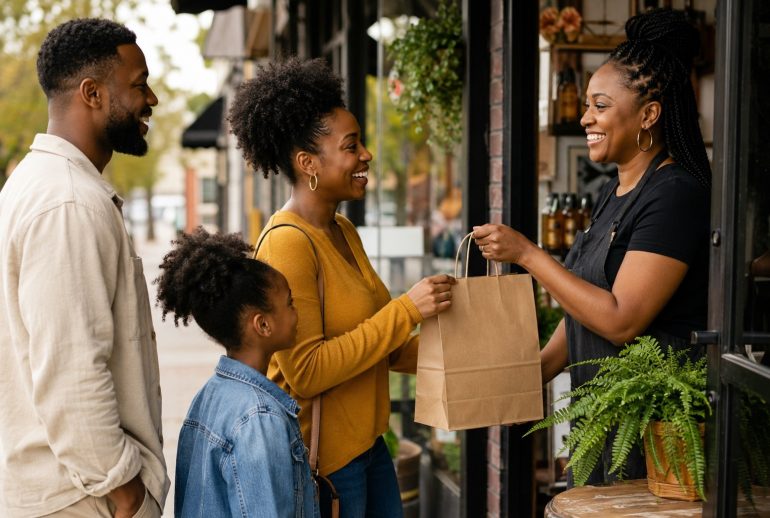
Supporting Black-owned small businesses is about more than buying a product or paying for a service. It is about helping families grow, keeping money moving inside the community, creating opportunities for young people, and honoring the courage it takes to build something from the ground up. Every small business has a story behind it, and many Black-owned businesses carry stories of sacrifice, creativity, faith, hard work, and the desire to serve the people around them.
In many communities, small businesses are not only places where people shop. They are gathering spaces, meeting points, sources of advice, places where children see adults working with purpose, and examples of what ownership can look like. A restaurant may become a place where families celebrate birthdays and graduations. A barbershop may become a space where young men receive guidance. A beauty salon may become a place where women share encouragement, resources, and community news. A clothing brand, food vendor, tutoring service, cleaning company, daycare, trucking business, consulting firm, or home-based business may quietly support several families at once.
For Black families, supporting local and Black-owned businesses is one practical way to invest in the future. It helps build economic strength, but it also builds pride, connection, and possibility. When children see people from their own community owning businesses, solving problems, serving customers, and creating jobs, they begin to understand that entrepreneurship is not a distant dream. It becomes something they can see, touch, learn from, and maybe one day build for themselves.
1. Black-Owned Businesses Create More Than Income.
A Black-owned small business often begins with a person trying to solve a problem, meet a need, or create a better future for their family. The business may start at a kitchen table, in a garage, on a laptop, at a local market, or through word of mouth. It may begin with one skill, one recipe, one idea, one talent, or one service that the owner believes can help others.
The money earned from that business does not only support the owner. It may help pay rent, buy groceries, cover school supplies, support children’s activities, care for elders, fund college dreams, or keep a household stable. In many cases, the business becomes a family effort. Children help pack orders, spouses help with bookkeeping, cousins help at events, and friends help spread the word. The business becomes part of the family’s daily life.
This is why every purchase matters. When a customer buys from a small Black-owned business, that support may help a family stay open another month, hire help, improve equipment, pay for marketing, or expand into a larger space. It may seem like a simple transaction, but to the owner, it can represent belief, encouragement, and community trust.
Black-owned businesses also create emotional income in the form of pride and confidence. When an entrepreneur sees that the community believes in their work, it strengthens their motivation to keep going. Many small business owners face long hours, financial stress, paperwork, taxes, customer service challenges, and uncertainty. Community support reminds them that their work matters beyond profit.
2. Community Support Helps Build Local Wealth.
Wealth-building does not happen only through large companies or major investments. It also happens through everyday decisions about where people spend money, who they hire, whose services they recommend, and which businesses they help grow. When more money circulates inside the community, more families have a chance to benefit from it.
Supporting Black-owned businesses can help strengthen local economic networks. A business owner may hire a local graphic designer, accountant, photographer, event planner, delivery driver, contractor, or assistant. That same owner may sponsor a youth team, donate to a school event, buy food from another local vendor, or partner with a community organization. One business can create many small connections that support other people.
This kind of community economics is important because many Black families have faced generations of barriers to wealth-building, including discrimination in lending, housing, employment, education, and business ownership. Supporting Black-owned businesses does not solve every economic challenge, but it is one practical way to help create stronger financial pathways.
When families intentionally support businesses in their own community, they are doing more than spending money. They are helping build a local ecosystem where ownership, employment, mentorship, and opportunity can grow together. Over time, these choices can help create a stronger foundation for the next generation.
3. Black-Owned Businesses Give Young People Real Examples Of Ownership.
Young people need to see examples of ownership close to home. It is one thing to tell a child they can become an entrepreneur. It is another thing for that child to walk into a local business and see someone who looks like them running the operation, greeting customers, managing staff, solving problems, and making decisions.
These real-life examples can change how young people imagine their future. A child who sees a Black-owned bookstore may begin to think about writing. A teen who visits a Black-owned restaurant may become curious about culinary arts. A young person who watches a family member run a cleaning business, clothing brand, landscaping company, or online store may begin to understand that business ownership is possible with planning, discipline, and support.
Small businesses can also become informal classrooms. Young people can learn customer service, communication, budgeting, marketing, time management, leadership, and problem-solving by watching business owners work. Even a simple conversation with an entrepreneur can teach a young person something valuable about responsibility and persistence.
For Black youth, this kind of exposure matters because it helps expand their vision. They learn that success does not have to fit only one path. College, trades, entrepreneurship, creative work, professional careers, and community service can all be part of a meaningful future. When young people see ownership in action, they begin to understand that they can build, lead, and contribute in their own way.
4. Small Businesses Often Carry Culture And Community Memory.
Many Black-owned businesses are also cultural spaces. They carry traditions, stories, flavors, music, language, fashion, beauty practices, family values, and community history. A food business may carry recipes passed down through generations. A salon or barbershop may preserve traditions of care, conversation, and style. A clothing brand may reflect African Diaspora pride, faith, creativity, or social messages. A bookstore may protect stories that larger stores often overlook.
These businesses help keep culture alive in everyday life. They remind families that culture is not only found in museums or history books. It is found in the places people gather, the food they eat, the art they buy, the services they trust, and the conversations they have while supporting one another.
Community memory is also preserved through long-standing businesses. Some businesses have served families for decades. They have watched children grow up, seen neighborhoods change, supported celebrations, and helped families through difficult seasons. Even newer businesses can become part of that community story when they serve with care and consistency.
Supporting these businesses helps protect more than income. It helps protect identity. It helps protect spaces where Black culture can be seen, respected, and celebrated. It helps families stay connected to the people and traditions that shape community life.
5. Supporting Black Businesses Builds Trust And Relationship.
One of the strongest parts of small business support is relationship. When people shop at local businesses, they often get to know the owner, the workers, and the story behind the service. That relationship creates trust in a way that large companies often cannot match.
A customer may know that the baker remembers their child’s birthday cake every year. A barber may know when a young man is going through a hard time. A tutor may understand a child’s learning style and family background. A local event planner may know the traditions that matter to the family. These relationships make service more personal and meaningful.
Trust is especially valuable in the Black community because many families want to feel understood and respected when they spend their money. They want businesses that understand their hair, skin, food, culture, family needs, language, music, values, and community experiences. Black-owned businesses often bring that cultural understanding into their work naturally.
This does not mean every Black-owned business will be perfect, because every business is run by people who are learning and growing. But when there is relationship, there is often more room for honest feedback, improvement, loyalty, and mutual respect. Supporting a business can become more than a purchase. It can become a partnership.
6. Community Support Helps Businesses Survive Difficult Seasons.
Small businesses often face challenges that customers may not see. Behind the scenes, owners may be dealing with rising costs, rent, supplies, taxes, staffing issues, slow seasons, online competition, marketing expenses, licensing requirements, and the pressure to keep customers satisfied. Many business owners work long hours and carry stress quietly because they do not want to appear weak or unprepared.
Community support can help a business survive these difficult seasons. This support does not always have to be expensive. Buying something, leaving a positive review, sharing a post, referring a friend, attending an event, giving respectful feedback, or simply encouraging the owner can make a difference. Sometimes a business does not only need sales; it also needs visibility, patience, and word-of-mouth support.
Many people want Black-owned businesses to succeed, but support must become consistent. A business cannot survive on celebration alone during Black History Month or special holidays. It needs year-round customers, repeat clients, referrals, and community loyalty. Consistent support helps businesses plan, grow, and serve better.
When communities show up during slow seasons, they help protect local ownership. They help make sure that small businesses are not pushed out by larger companies with bigger budgets. They help keep opportunity alive for families who are trying to build something lasting.
7. Black-Owned Businesses Can Create Jobs And Training Opportunities.
A growing business can become a source of employment and training for the community. Even if a business starts with one person, it may eventually need help with sales, delivery, customer service, bookkeeping, cleaning, design, inventory, marketing, childcare, transportation, or event support. These opportunities can give people income, experience, and confidence.
For young people, small businesses can provide first-job experiences that teach responsibility and professionalism. A teenager who works for a local business may learn how to show up on time, speak to customers, handle money, follow instructions, solve problems, and work as part of a team. These early lessons can shape their future work habits.
Black-owned businesses can also create opportunities for people who may be overlooked by larger employers. A small business owner may be more willing to train someone, mentor them, understand their family situation, or give them a chance to grow. This kind of opportunity can be life-changing for someone who needs work experience or a fresh start.
When the community supports local businesses, it helps create the conditions for these jobs and training opportunities to exist. Every growing business has the potential to open doors for someone else.
8. Families Can Teach Children How To Support Community Businesses.
Supporting Black-owned businesses can become a family value. Parents and caregivers can teach children that where money goes matters. Instead of only looking for the cheapest option or the fastest service, families can talk about the importance of supporting people who are building something in the community.
This lesson can be taught in simple ways. A parent might take children to a Black-owned restaurant and explain the story of the owner. A family might buy books from a Black-owned bookstore, order from a local baker, hire a community photographer, or visit a vendor market together. Children can learn that supporting a business is also supporting a family, a dream, and a local economy.
These experiences can also teach children about respect. They can learn to be patient with small businesses, understand the value of handmade or personal service, and appreciate the work behind a product. They can also learn how to give fair feedback without tearing someone down.
When children grow up seeing their families support local businesses, they begin to understand community responsibility. They learn that success is not only individual. It is something people can help each other build.
9. Online Support Matters Too.
In today’s world, online support can be just as important as in-person support. Many small businesses depend on social media, Google reviews, website traffic, email lists, and online referrals to reach new customers. A person may not be able to buy something every week, but they can still help a business grow by sharing posts, commenting, tagging friends, writing reviews, or recommending the business in community groups.
This kind of support matters because visibility is one of the biggest challenges for small businesses. A business may offer excellent products or services, but if people do not know it exists, it cannot grow. Online engagement helps more people discover the business and trust it.
Positive reviews are especially powerful. When a customer writes a thoughtful review, it helps future customers feel more confident. It also helps the business show up better in online searches. A few honest sentences about good service, quality work, or a positive experience can help a business attract new customers.
Families and community members can make online support a habit. After a good experience, leave a review. When a business posts an update, share it. When someone asks for a recommendation, mention a local Black-owned business. These small actions can create real momentum.
10. Supporting Businesses Also Means Offering Grace And Accountability.
Community support does not mean ignoring problems. Black-owned businesses, like all businesses, should provide good service, communicate clearly, treat customers with respect, and continue improving. Customers also deserve to be treated fairly. Support should include both grace and accountability.
Grace means understanding that small businesses may not have the same staff, systems, or resources as large corporations. A one-person business may be managing orders, emails, social media, inventory, family responsibilities, and customer service all at once. Patience and respectful communication can go a long way.
Accountability means giving honest feedback in a way that helps the business improve instead of publicly tearing it down without first trying to resolve the issue. If something goes wrong, a respectful message or conversation can sometimes lead to a better outcome. Business owners should also be willing to listen, apologize when necessary, and make changes.
Healthy community economics requires maturity on both sides. Customers should support with respect, and business owners should serve with excellence. When both sides value relationship, the business community becomes stronger.
11. Black-Owned Businesses Need Networks, Not Just Customers.
Customers are important, but businesses also need networks. A strong network includes mentors, accountants, web designers, legal support, marketing help, funding resources, community organizations, business associations, and other entrepreneurs. Many small business owners have talent and passion, but they also need access to information and support.
This is where the community can play a larger role. Someone may know a grant opportunity. Someone else may know a good bookkeeper. A retired business owner may be able to mentor a new entrepreneur. A church, nonprofit, or community group may be able to host vendor events or workshops. A local professional may help a business improve its website, branding, or financial systems.
When Black-owned businesses are connected to strong networks, they have a better chance to survive and grow. They can avoid mistakes, find resources, build partnerships, and serve more people. Community support should not only focus on buying from businesses, but also helping them gain the tools and relationships they need to succeed.
A business that is well-supported can become a stronger resource for the whole community. It can hire, sponsor, mentor, donate, teach, and inspire others. That kind of growth is bigger than one business owner. It becomes community development.
12. Every Small Choice Can Help Build A Stronger Future.
Supporting Black-owned businesses does not have to be complicated. Families can start with small, intentional choices. They can choose one local business to support each month. They can buy gifts from Black-owned brands. They can hire local professionals when possible. They can attend vendor markets, share business pages, leave reviews, and recommend services to friends.
These choices may seem small, but repeated actions create culture. When supporting Black businesses becomes normal, children notice. Entrepreneurs feel encouraged. More people take ownership seriously. Money circulates with more purpose. Community pride grows stronger.
The goal is not to make every purchase perfect. Families have budgets, needs, and responsibilities, and sometimes convenience or cost will guide decisions. But when people become more intentional, they can make support part of everyday life. Even one small decision can help a business owner keep going.
Strong communities are built through repeated acts of care. Supporting Black-owned businesses is one of those acts. It is practical, visible, and powerful because it connects family, culture, ownership, and opportunity.
Conclusion.
Black-owned small businesses are an important part of community strength. They create income, jobs, mentorship, culture, services, gathering spaces, and examples of ownership for the next generation. They remind families that economic empowerment is not only a big idea; it can be practiced through everyday choices.
When families support Black-owned businesses, they are helping more than one owner. They are helping families stay stable, helping young people see possibility, helping culture remain visible, and helping local wealth grow. They are also encouraging the courage it takes to build something in a world where small business ownership is not always easy.
Support can begin with one purchase, one review, one referral, one shared post, one conversation, or one visit to a local vendor. Over time, these small actions can help build stronger businesses and a stronger community. When Black-owned businesses grow, the benefits can reach families, youth, elders, workers, and future entrepreneurs.
Akukulu Family encourages families and community members to choose one Black-owned business to support this month. Buy from them, share their page, leave a kind review, recommend them to a friend, or learn the story behind their work. Every thoughtful act of support helps build community pride, economic strength, and opportunity for the next generation.
